A friend and I got to talking the other night about all the reasons he thought I shouldn't go to Korea. Which finally came down to him saying, "Well, I want to visit. What is the gay scene like?" An interesting question which I had never stopped to consider, so color me inspired to write this post!
Korea does have loads of gay bars spread around different areas, the gay heart of Itaewon, lovingly nicknamed "Homo-Hill" is full of upscale bars and clubs frequented by locals and ex-pats alike.Seoul happens to host one of the most unique LGBTQ festivals in Asia, called The Korean Queer Culture Festival. I asked a few friends who said LGBTQ rights are acknowledged, but still considered taboo in many places. So just like the U.S, I would say it leaves something to be desired. In many ways, gay culture in Korea has flourished, but this doesn't eliminate the stigma in a country based very much on pride and traditions.

There is very little mention on LGBT folks in Korean history or myth, but one can always count on good old Wikipedia (never ever use this in a college paper) for some historical information:
The earliest such recorded example might be that of King Hyegong, the 36th ruler of the Silla Dynasty who was killed at the age of 22 by his noblemen who revolted in protest of his "femininity".
King Mokjong (980-1009) and King Gongmin (1325–1374) of Goryeo are both on record as having kept several wonchung ("male lovers") in their courts as “little-brother attendants” (chajewhi) who served as sexual partners. After the death of his wife, King Gongmin even went so far as to create a ministry whose sole purpose was to seek out and recruit young men from all over the country to serve in his court.Evidence of homosexual activities among the common people are harder to find as there are fewer records pertaining to them.
During the Joseon Era before the Japanese annexation there were travelling theater groups known as namsandang which included underaged males called midong (beautiful boys). The troupes provided "various types of entertainment, including band music, song, masked dance, circus, and puppet plays," sometimes with graphic representations of same-sex intercourse.
These types of stories aren't exclusive to Korea and oft times are used to paint a portrait of sexual perversion, as opposed to the reality that same-sex partnership is the same as any other form of partnership. Love is universal and really, minus of few technicalities, sex is sex and regardless of who is having it!
This got me thinking of the issue of gay rights in general. Up until the 90's Korea had no history of specifically established discriminatory laws against gays and lesbians, and homosexuality hadn't been written about in any government documents or brought up in a court setting. Here is a bit of an LGBT timeline for Korea.
November 27, 1995- First lesbian commitment ceremony in Korea.
1998- South Korea's first LGBT themed magazine launched.
February 12, 2000- Hong Seok-Cheon- male model and actor came out as gay, he was fired and removed from this position as a host on a children's show.

November 1, 2001-the Ministry of Information and Communications formally enacted an internet content rating system classifying gay and lesbian websites as "harmful media" and mandating their blockage.
January 10, 2002- The Korean LGBT community filed the first lawsuit against Korean government for unconstitutionally blocking access.

November 29, 2002- Harisu, one of Korea's most famous transgender entertainers, becomes the second person in the history of Korea to legally change gender.

April 2, 2003-Korean National Human Rights Protection Committee, officially advised Korea's Youth Protection Committee, to remove anti-gay language from the 1997 Youth Protection Act. This is often recognized as a huge turning point in the LGBT movement in Korea.
2004- The Korean Democratic Labour Party,on its campaign bid for the Parliamentary Elections, promised the abolition of all inequalities against sexual minorities and won a record 10 seats in the Kukhoe\ National Assembly.
June 22, 2006 - the Supreme Court ruled that transgender individuals who had undergone successful gender reassignment surgery have the right to declare themselves in their new gender in all legal documents. This includes the right to request a correction of their gender-on-file in all public and government records such as the census registry.
2007- The Anti-Discrimination Act was introduced by The National Human Rights Commission of the Republic of Korea, the section prohibiting discrimination based on sexual orientation has been withdrawn, following outrages from conservative Christian organizations.
December 19, 2007, Lee Myuang Bak of the Conservative Grand National Party won the presidential election. In a 2007 newspaper interview, the president-elect stated that homosexuality is "abnormal", and that he opposed legal recognition of same-sex marriages.

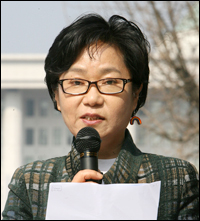
April 9,2008- Choi Hyun-sook (최현숙) became South Korea's first openly-gay candidate for national public office when she ran for a seat in the National Assembly of South Korea. Her bid was unsuccessful.
October 8, 2008- Popular openly actor Kim Ji Hoo hanged himself, it was attributed to the stigma and pressure he faced from the media. Days before taking his life, Kim wrote on his web site: "Life is like the wind. What's there to agonize over? Meetings are happy, partings are sad, everything is just a moment."

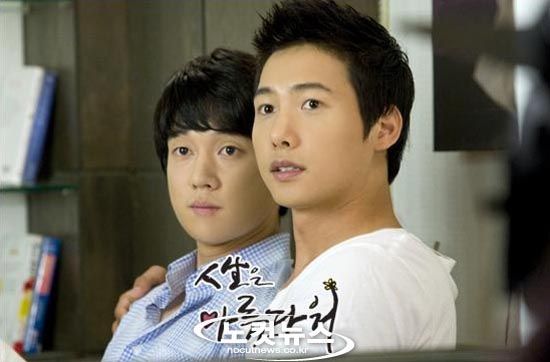
2010- South Korean mainstream television began to feature gay characters in their shows. the soap opera "Life is Beautiful" premiered on SBS broadcast TV, becoming the first prime-time drama to explore a gay male couple's relationship as their unwitting families set them up on dates with women.
Thanks for all the lovely information from:
Utopia Asia
Ask A Korean!
ILGA Asia
Queer Korea